EventPanelLondon, 2023
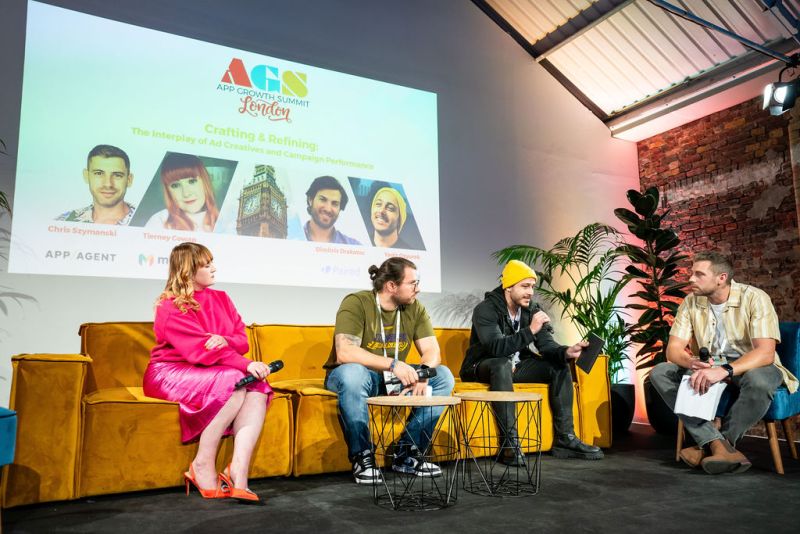
App Growth Summit London 2023
Panel speaker on growth strategies, creative optimisation across ad networks, and the unique challenges facing the mobile gaming industry.
About the Event
App Growth Summit is one of the most respected gatherings for mobile growth professionals in Europe. The London 2023 edition brought together UA managers, creative strategists, and product marketers from leading mobile studios and agencies. The format centred on candid panel discussions, practitioners sharing real frameworks and hard-won lessons rather than polished sales pitches.
Session: Crafting & Refining, The Interplay of Ad Creatives and Campaign Performance
The panel explored how creative quality and campaign structure are inseparable, and how the best-performing teams treat them as a single system rather than two separate workstreams. The conversation covered three interconnected themes: how to build a growth strategy that scales, how to optimise creatives across different ad networks, and why mobile gaming faces a distinct set of challenges that generic UA playbooks simply don’t address.
- Growth StrategyBuilding scalable UA frameworks that hold up as spend increases and audiences saturate
- Creative OptimisationHow to test, iterate, and scale creatives differently across Meta, Google, TikTok, and DSPs
- Mobile Gaming ChallengesThe unique pressures of gaming UA, seasonality, IP leverage, genre saturation, and LTV unpredictability
Key Points Shared on Stage
Growth strategy starts with understanding your funnel ceiling
Before scaling spend, you need to know where your funnel breaks. Many teams push budget into the top of the funnel without fixing mid-funnel drop-off, which means they're paying to acquire users who will never convert. The most effective growth strategies begin with a clear-eyed audit of where value is actually being created, and then build backwards from there.
Creative optimisation is network-specific, there is no universal playbook
What works on Meta rarely translates directly to Google App Campaigns or TikTok. Each network has its own creative consumption patterns, auction dynamics, and signal feedback loops. On Meta, you can iterate quickly with static and short-form video. On Google UAC, the algorithm needs volume and variety, more assets, more formats, more signals. On TikTok, authenticity and native feel outperform polished production. Treating these as one channel is one of the most common and costly mistakes in mobile UA.
Mobile gaming faces structural challenges that other verticals don't
Gaming UA operates under a unique set of pressures. Genre saturation means you're often competing for the same users with near-identical products. LTV curves are long and unpredictable, making early optimisation signals unreliable. Seasonality, driven by game events, IP releases, and platform promotions, creates volatile CPIs that can swing dramatically week to week. And the post-IDFA environment hit gaming harder than most verticals, because gaming had historically relied on granular behavioural targeting more than almost any other category.
The teams winning at creative are running it like a product function
The best creative teams aren't just making ads, they're running structured experiments with hypotheses, control groups, and clear success metrics. They have a backlog of creative concepts prioritised by expected impact. They do post-mortems on what failed and why. They treat creative as a compounding asset, not a one-off production task. This shift, from creative as output to creative as a learning system, is what separates the teams consistently hitting efficiency targets from those chasing performance reactively.
Context
At the time of this talk, I was working as UA Manager at Product Madness, one of the largest social casino gaming studios globally, with titles including Heart of Vegas, Cashman Casino, and Lightning Link. The perspective shared on stage was grounded in managing multi-million dollar UA budgets across Google, Meta, and programmatic channels, with a specific focus on creative strategy and performance measurement in a post-IDFA environment. The mobile gaming challenges discussed weren’t theoretical, they were the day-to-day reality of scaling a portfolio of mature titles in a highly competitive market.
From the Summit
Session title slide featuring all four panellists, including Yagiz Bugra Ozyurek Sharing insights on creative optimisation and mobile gaming growth challenges Discussing the nuances of ad network performance across different creative formats Connecting with fellow growth professionals at the summit